Heritage site in sri lanka
Sri Lanka Heritage
The most Beautiful UNESCO World Heritage Sites in Sri Lanka

Ancient City of Sigiriya

What is Sigiriya ?
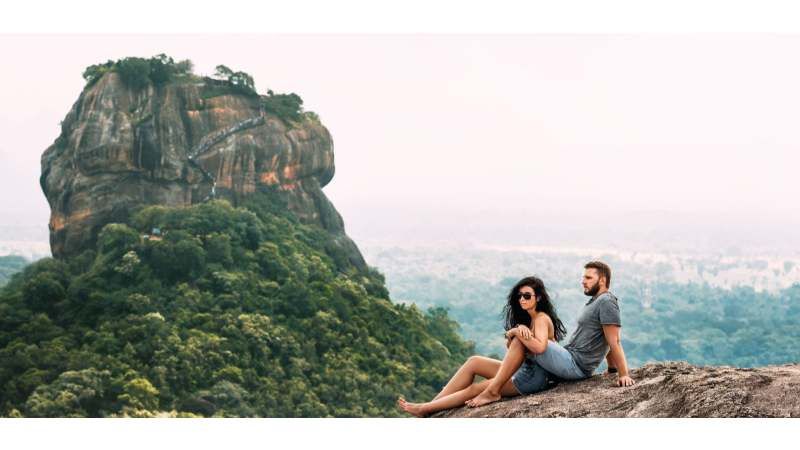
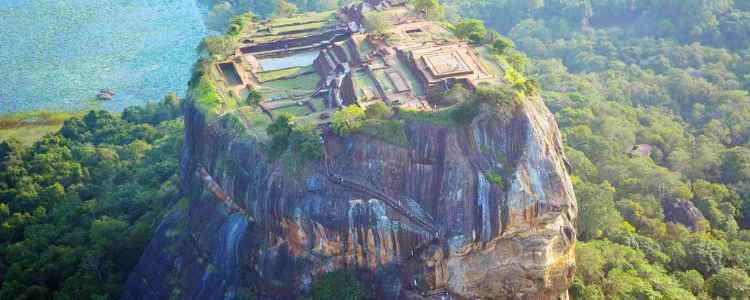
Sigiriya is an ancient rock fortress and palace built by King Kashyapa during the reign of 473 – 495 which is standing majestically 660 feet straight up. It is located in the northern Matale district near the town of Dambulla in central province of Sri Lanka. The word Sigiriya or the Sinhagiri means the Lion’s Rock where you have to climb up 1200 steps before you reach the Lion Rock Fortress on top of Sigiriya. There are several platforms that break up the steps and allow for a little break if you need it. Today Sigiriya rock fortress is one of the most famous Archeological Treasure and UNESCO named Sigiriya rock as a World Heritage in 1982 under the name “Ancient City of Sigiriya Sri Lanka”.

The Architecture of Sigiriya Lion Rock
This fortified garden city of Sigiriya rock fortress is an exceptional master piece of ancient urban planning / landscape & architecture / construction technology /exceptional hydraulic engineering & management / ancient fine art with unique harmony between nature and human imagination and all these living examples proved that it was a Well Planned City & Palace in 5th Century AD. Sigiriya rock fortress is recognized as one of the best preserved surviving ancient urban sites in Asia from the 1st millennium or simply it’s a Living Museum. Sigiriya World Heritage Site is versatile and many-faceted appeal, and it is one of Sri Lanka’s ancient political capitals and Sri Lanka’s most sensational heritage site.
History of Sigiriya Rock Fortress
Historical research carried out at the site has brought to light evidence to show that the origins of Sigiriya date back to pre-historic times. Situated at the base of the Sigiriya rock of its eastern side, is a monadnock named Aligala (Elephant Rock). In a cave underneath this, excavation have revealed remains of pre-historic human settlements that existed here around 5,500 years B.P. In addition, there is evidence of human habitation in this area, as far back in history as the 9th — 10th centuries B.C.
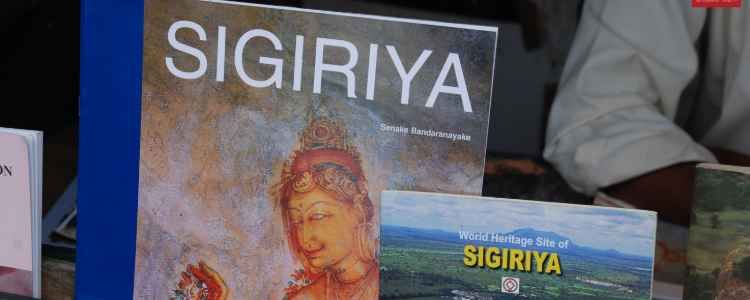
In the 3rd century B.C. a Buddhist monastery had been established at Sigiriya rock fortress. Thirty cave-shelters with drip-ledges, which accommodate monks, have been identified at the base of the great rock so far. In eight of them, details of donations of cave shelters have been inscribed in Brahmi script.
Sigiriya Lion Rock Fortress in 7th Century AD
Subsequently however, in the 6th and 7th centuries A.D., Sigiriya ceased to be of political importance and once again became the abode of Buddhist monks. During this period, the cave-shelters with drip-ledges which belonged to the earlier monastic phase were further improved. Additional shrines such as stupa, image house and bodhi tree shrine were constructed. This second phase of the monastic development continued up to the 12th - 13th centuries A.D.
City Planning of Sigiriya Rock - World Heritage
The Lion rock Sigiriya has two fortified precincts where the western precinct encompasses 90 hectares, and the eastern precinct covers 40 hectares. The western area was the royal park area, a symmetrically-designed pleasure garden with elaborate water-retaining structures, as well as surface and subsurface hydraulic systems. It is surrounded by three ramparts and two moats, forming a rectangular area whose inner precincts measure about 700 meters from east to west and 500 meters from north to south.
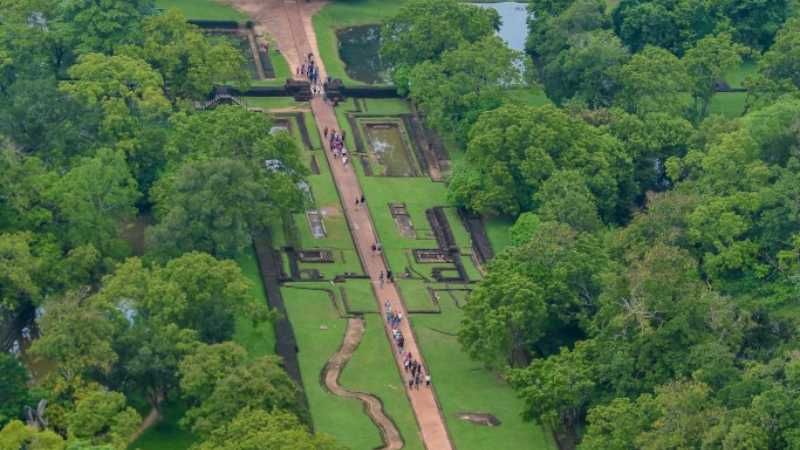
On the other side of the Lion rock Sigiriya, the eastern area appears to have been a ceremonial precinct with a large central pavilion as its only permanent structure. Kasyapa and his royal family lived their lives within these walls. Moving inward from the two precincts in an ever-ascending fashion are a series of boulder gardens and then terraced gardens, leading to the entrance to the Sigiriya rock. Access to the rock is gained via a long passageway that begins on the west side of the terrace gardens, and winds northward along the Mirror Wall to the Lion Platform.
Water Garden & Landscape gardening of Lion rock Sigiriya
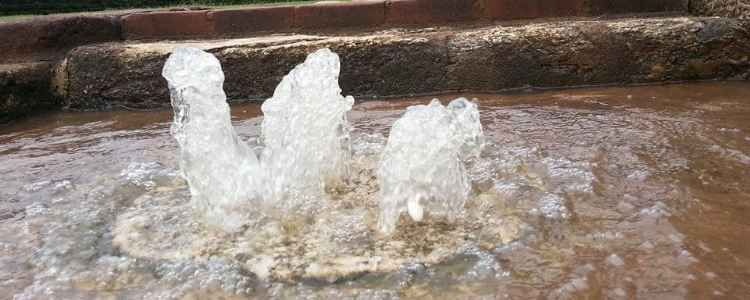
Among the significant features of Sigiriya, the Water Gardens are especially noteworthy. Though outwardly the Water gardens appear to be one garden system in Concept, four distinct parts are clearly discernible in its creation, and at present they are called the Water Garden Nos. 1, 2 and 3 and the Miniature Water Garden.
.
Lion Rock Sigiriya Graffiti
Main features of Sigiriya rock are Sigiri graffiti, Lion’s paw entrance, Boulders garden, Mirror wall, Fresco paintings of female figures, Extensive networks of landscaped garden, Water gardens, Moats, Ramparts and the remains of the palace.
Boulder Garden of Lion Rock Sigiriya
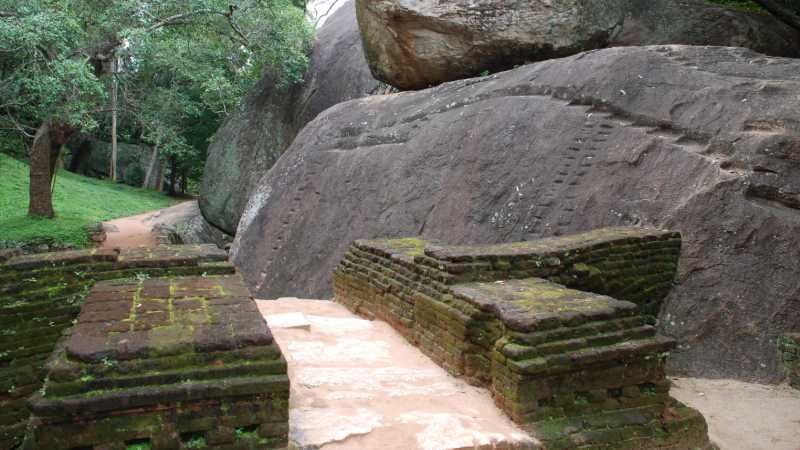
The Boulder Garden comprises sloping terrain around the central rock which is dotted with boulders of various sizes. The routes to the palace on the rock summit are laid out through the boulder garden as winding pathways that are punctuated by natural boulder arches. Among the unique features of this garden are the Cistern Rock deriving its name from a large cistern formed out of the natural boulder and large granite slabs, the ‘Audience Hall’ where a five-meter long main throne is carved out of the living rock, the ’Preaching Rock’ where a seat is carved out at the flattened edge of a fairly high boulder, and the ‘ Asana Cave’ where a seat is carved out inside a natural cave.
Lion Staircase
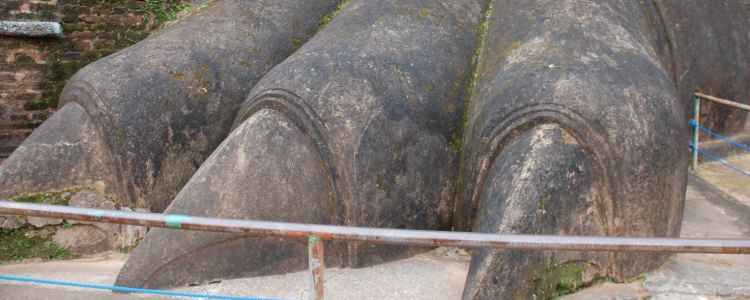
The final ascent to the royal palace atop Sigiriya rock lies through the Lion Staircase, which faces north and has two huge paws of a lion in front. These lion-paws, made of brick and covered with plaster, are the remnants of a fore part of lion figure that must have once stood there.
Palace Complex of Sigiriya Lion Rock
The Palace Complex on the top of the Sigiriya rock is around 1.5 hectares in extent. The principal monument to be seen there is the royal palace which lies towards the west. The palace garden consisting’ of a large artificial pool and. other garden features are located to the east. Below the palace, on a rock facing the east is a throne carved out of the natural rock.
Lion Rock Paintings
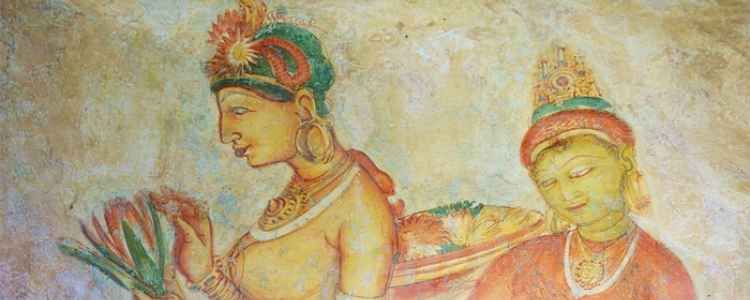
The fifth century A.D. paintings are indisputably the zenith of all artistic creations of Sri Lanka. These paintings, found in a depression on the western side of the rock-face, nineteen in number, are figures of exquisitely beautiful damsels, floating among clouds. According to the Sigiri graffiti (verses scratched on the Mirror Wall over the ages) however, there had been five hundred such figures painted all over the western and northern rock-faces, originally.
.
How Sigiriya related to Ramayana Yatra Sri Lanka ?
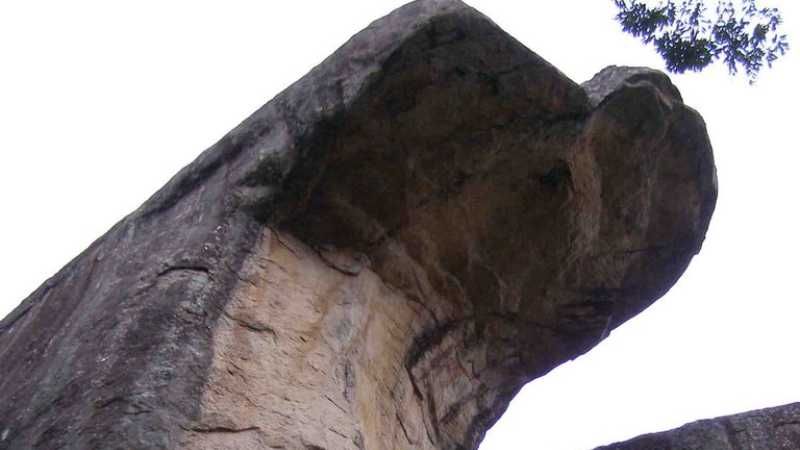
Cobra Hood Cave & Ramayana Yatra Sri Lanka
Cobra hood cave also known as the “Parumaka Naguliya Lena”, is a natural geological formation projected as a cobra hood located within the boulder garden of Sigiriya Rock Fortress complex with plastered interior of the cave once embellished with floral and animal paintings. This is also part of the Sigiriya Rock Fortress complex (UNESCO World Heritage)
 As per the recent explorations of Ramayana in Lanka Pura by Mr. Lal Srinivas and Dr. Mirando Obesekara, Sigiriya can be considered as a post historical archaeology turning point of King Ravana. According to them, Sigiriya may be the Alakamandava or City of the Gods that was built up before 50 centuries ago by King Kuvera who was the half brother of King Ravana as defined in the Ramayanaya yatra Sri Lanka.


It's really good 👌👌
ReplyDelete